Introduction
The stock market often feels confusing to beginners because most explanations are either too technical or incomplete. In reality, the stock market is a structured system created to help businesses raise money and allow individuals to grow wealth over time. You do not need expert-level knowledge or a large budget to get started. What you need is clarity, discipline, and realistic expectations.
Stock market tips for beginners are not about finding shortcuts or predicting prices. They focus on understanding how buying shares in a business works, how companies benefit from selling shares, and how investors participate responsibly. Understanding the system allows beginners to replace fear with logic.
“The stock market is a device for transferring money from the active to the disciplined.”
This guide is written to remove confusion completely. By the end, you will know how the stock market works, what to trade, how many shares to buy, how risks work, and how to invest with confidence.
What Is the Stock Market?

The stock market is a marketplace where investors buy and sell shares of publicly listed companies. A share represents partial ownership in a company. When you buy a share, you become a shareholder with a financial interest in that business.
Companies list their shares to raise money, while investors buy shares to grow their capital. The stock market creates a link between business growth and personal wealth creation.
Buying Shares in a Business: How It Works

Buying shares means you own a small portion of a company. If the company grows and becomes more profitable, the value of your shares can increase. Some companies also pay dividends, which are portions of profit shared with investors.
You are not responsible for daily business decisions. Your role is limited to investment, which makes stock ownership simple and scalable for beginners.
How Does Selling Shares on the Stock Exchange Benefit Companies?
When companies sell shares, they receive capital without taking loans. This money can be used for expansion, technology, hiring, or clearing debt. Unlike loans, share capital does not require regular repayment.
This structure allows companies to grow faster, while investors benefit when the company’s value increases.
Why the Stock Market Matters
The stock market plays a critical role in economic development. It helps money flow from investors to productive businesses. This system supports innovation, job creation, and economic stability.
For individuals, the stock market provides a way to protect money from inflation and grow wealth over long periods. Long-term investors benefit from compound growth rather than short-term speculation.
A Strong Stock Market Depends On Key Factors
A strong stock market depends on profitable companies, investor trust, and a stable economy. Transparency, regulations, and accurate information are essential for market confidence.
When investors act on knowledge instead of emotion, markets function efficiently and sustainably.
How Stock Prices Are Decided
Stock prices move based on demand and supply. When more investors want to buy a stock, the price rises. When more investors want to sell, the price falls.
Company performance, earnings reports, economic news, and investor expectations all influence demand and supply. Prices do not move randomly; they reflect collective market opinion.
Understanding this concept helps beginners avoid panic during price fluctuations.
Essential Stock Market Tips for Beginners
Successful investing starts with correct habits. Beginners should focus on process, not predictions.
Start With Clear Investment Goals
Define your purpose clearly. Some investors aim for long-term growth, while others focus on income or capital safety. Your goal determines your strategy.
Clear goals prevent emotional decisions and unnecessary risk-taking.
Invest Time Before You Invest Money
Learning reduces mistakes. Beginners should understand basic terms, market behavior, and company fundamentals before investing money.
Time invested in learning often saves money later.
Learn Before You Trade
Trading without knowledge leads to losses. Beginners should observe the market, study companies, and understand risk before placing trades.
Trading without knowledge leads to losses. Beginners should observe the market, study companies, and understand risk before placing trades. Patience builds confidence and discipline.
“Know what you own, and know why you own it.”
Patience builds confidence and discipline.
How Many Shares Should I Buy to Make a Profit?
Profit does not depend on buying many shares. It depends on choosing good companies and holding them patiently.
A small investment in a strong company can outperform a large investment in a weak one.
Share Quantity vs Profit Explained
If a stock grows by 25%, the return is based on your invested amount, not the number of shares. Quality matters more than quantity.
This mindset helps beginners invest logically.
Why Consistency Matters More Than Quantity
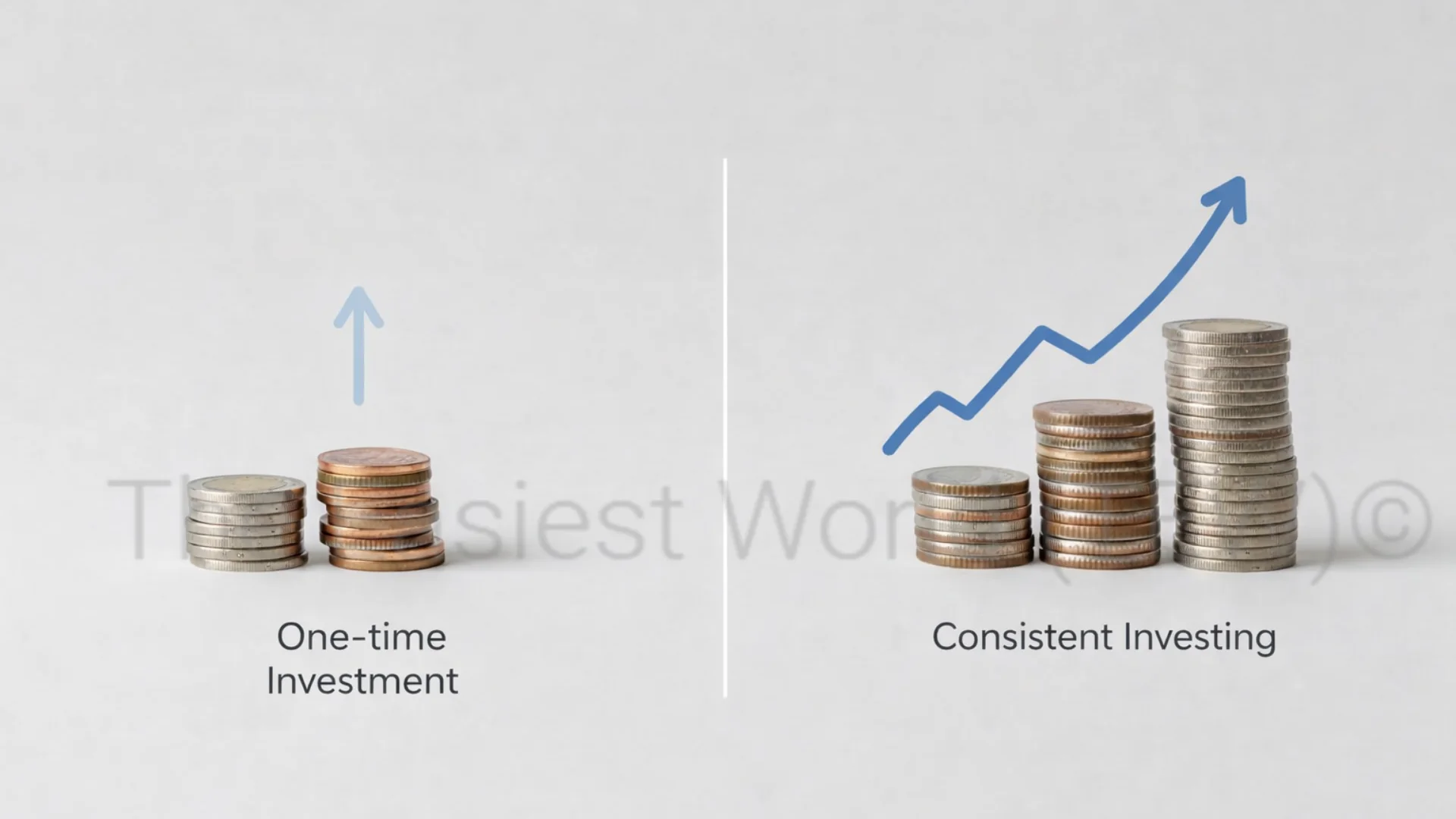
Regular investing reduces timing risk and builds discipline. Consistent contributions often outperform one-time investments.
This approach suits beginners with limited capital.
Things to Trade in the Stock Market
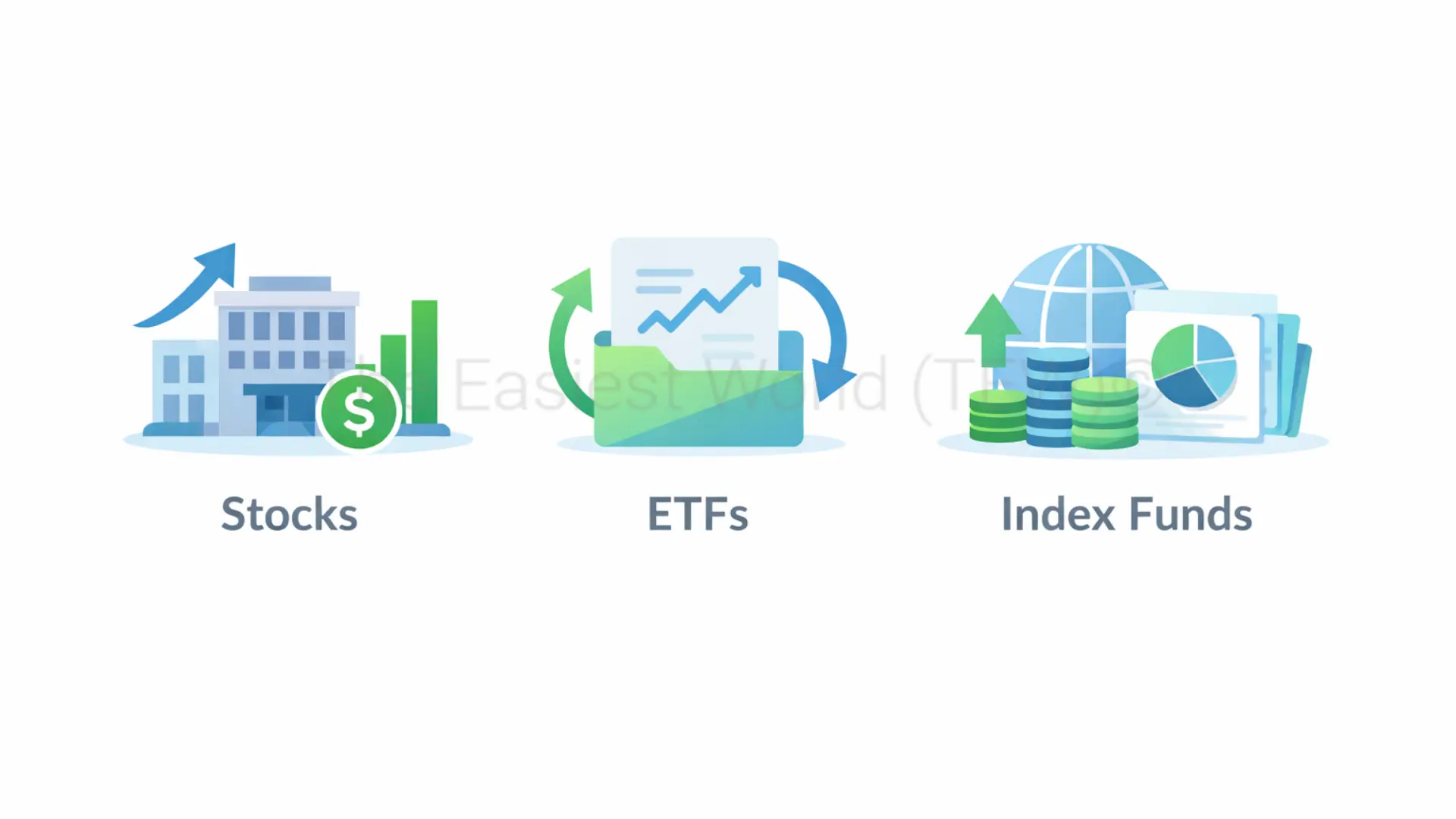
Beginners should start with simple investment instruments . Complexity increases risk.
Individual Stocks
Individual stocks represent ownership in specific companies. They offer high growth potential but require research and patience.
Beginners should focus on established companies with stable performance.
ETFs and Index Funds
ETFs and index funds invest in multiple companies at once. They reduce risk through diversification.
These options are ideal for beginners seeking steady growth.
Long-Term vs Short-Term Trading
Long-term investing focuses on holding assets for years. Short-term trading aims to profit from price movements.
Beginners benefit more from long-term strategies due to lower stress and risk.
Role of Brokers and Trading AWhat Happens When a Stock Goes to Zeroccounts
To invest in stocks, you need a broker. A broker provides access to the stock exchange and executes trades on your behalf.
A trading account allows you to buy and sell shares, while a demat account stores shares electronically. Choosing a regulated broker is essential for safety.
Basic Stock Market Terms Every Beginner Must Know
Understanding basic terms improves confidence. Common terms include shares, dividends, market capitalization, volatility, and portfolio.
Knowing these terms helps beginners understand market discussions and reports.
Risks Every Beginner Must Understand
Risk is unavoidable in investing. Understanding risk helps manage it effectively.
What Happens When a Stock Goes to Zero?

If a company fails completely, its stock can become worthless. Investors may lose their invested amount in that stock.
Diversification reduces the impact of such losses.
Can You Lose All Your Money?
You can lose money in individual stocks, but diversified portfolios significantly reduce this risk.
Risk awareness leads to better decisions.
How Long It Takes to See Real Profits
Stock market investing is not instant. Real profits usually come from long-term holding and compound growth.
Short-term fluctuations are normal. Long-term discipline increases success probability.
Common Beginner Mistakes to Avoid
Avoiding mistakes protects capital.
Investing Without Research
Buying stocks without understanding the business often leads to losses.
Emotional Buying and Selling
Fear and greed cause poor decisions. Emotional control improves outcomes.
Chasing Quick Profits
Quick-profit strategies attract beginners but usually fail.
Stock Market Myths Beginners Should Ignore
Many myths discourage beginners. Investing is not gambling when done correctly. Timing the market perfectly is unnecessary.
Consistent, informed investing works better than speculation.
Smart Habits for Long-Term Success
Strong habits create sustainable results.
Diversification Basics
Diversification spreads risk across assets. It protects portfolios from major losses.
Staying Patient in Market Ups and Downs
Market volatility is normal. Staying invested during downturns often leads to better long-term returns.
Conclusion

Learning stock market tips for beginners requires clarity, patience, and realistic expectations. Buying shares in a business allows individuals to participate in economic growth without managing operations directly.
A strong stock market depends on informed investors and healthy companies. Beginners should invest time in learning, define clear goals, and focus on consistency rather than immediate profits.
“Time in the market beats timing the market.”
Understanding risks, knowing what to trade, and avoiding emotional decisions builds confidence. With discipline and long-term thinking, the stock market becomes a reliable tool for steady wealth creation.
FAQ – Stock Market Tips for Beginners
The best way is to start with learning the basics, setting clear goals, and investing small amounts consistently in diversified assets like ETFs or strong companies.
There is no fixed amount. Many beginners start with small sums and increase investments gradually as they gain confidence and knowledge.
The stock market involves risk, but beginners can reduce it by diversifying investments, avoiding emotional decisions, and focusing on long-term strategies.
Beginners should focus on long-term holding, usually several years, to benefit from compound growth and reduce the impact of short-term volatility.
Losing all money is unlikely if investments are diversified and managed responsibly. Risk increases when money is placed in a single stock without proper research.
Sources & References
The information in this article is based on widely accepted investing principles and educational material from trusted financial institutions, regulators, and stock exchange authorities.
- Investopedia – Stock market basics, buying shares, investing concepts, and beginner-friendly explanations.
- U.S. Securities and Exchange Commission (SEC) – Official investor education, market risks, and long-term investing guidance.
- Vanguard Investor Education – Long-term investing, diversification, ETFs, and consistent investment strategies.
- Morningstar Investing Center – Investment research, portfolio diversification, and risk management insights.
- Fidelity Learning Center – Beginner investing guides, brokerage education, and stock market fundamentals.
- NYSE Education / Nasdaq Investing – How stock exchanges operate and how companies list shares in public markets.
⚠️ Disclaimer
The insights shared in this article are provided strictly for educational purposes and should not be considered financial, investment, or professional advice.
Investing in the stock market carries inherent risks, including the potential loss of your capital. Your financial decisions should always be based on your own research, risk tolerance, and personal goals.
We strongly encourage you to consult with a licensed financial advisor before making any investment decisions. The author and this website are not liable for any gains, losses, or other outcomes arising from the use of this information.
Think of this as guidance to empower your knowledge, not a guaranteed roadmap to profit.


Thank you for your articles. They are very helpful to me. Can you help me with something?